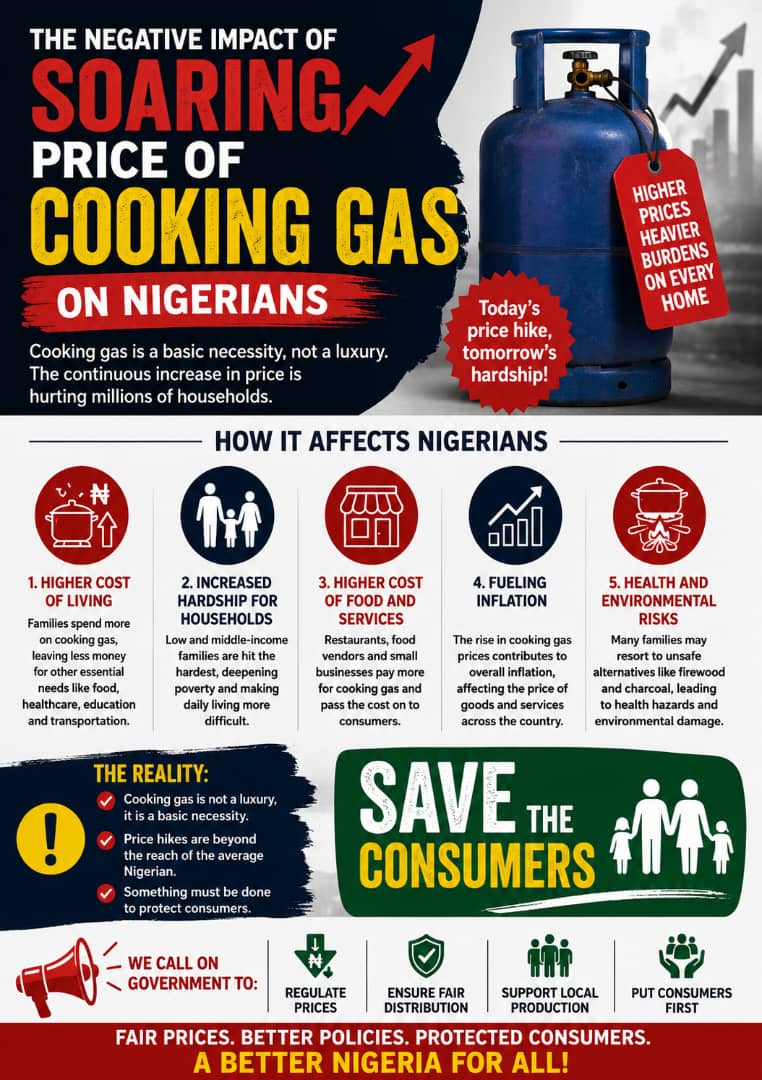
High cooking gas (LPG) prices in Nigeria—averaging ₦1,300 to ₦1,650 per kilogram depending on the location—are forcing millions of households to abandon clean energy for hazardous alternatives like firewood and kerosene. Small businesses, such as restaurants and bakeries, are also struggling with soaring overhead costs, squeezing everyday Nigerians amid wider inflation.
Economic and Health Impacts
The soaring cost of Liquefied Petroleum Gas (LPG) has dramatically reshaped daily survival for families and local businesses across the country.
- Reverting to Dirtier Fuels: Because of the high costs, many low-income households are forced to return to firewood, kerosene, or charcoal. This shift significantly increases the risk of indoor air pollution and respiratory illnesses.
- Crushing Small Businesses: Small-scale food vendors, caterers, and restaurants heavily rely on cooking gas. The high prices heavily eat into their profit margins, often forcing them to either raise their menu prices or shut down entirely.
- Wider Cost-of-Living Squeeze: The high cost of cooking gas compounds the broader inflation affecting food and transportation. Families are forced to prioritize basic groceries, further lowering their purchasing power.