
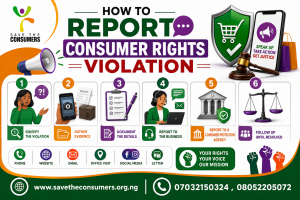
How to Report Consumer Rights Violations
Consumer rights violations occur when a business treats consumers unfairly, sells unsafe or defective products, engages in misleading advertising, or fails to honor its obligations. Reporting these violations helps protect not only you but also other consumers.
Step 1: Identify the Violation
Determine whether your rights have been violated. Common examples include:
- Selling counterfeit or substandard products.
- False or misleading advertisements.
- Hidden charges or unfair pricing.
- Refusal to honor warranties or guarantees.
- Failure to deliver paid-for goods or services.
- Poor or deceptive customer service.
- Unsafe or expired products.
Step 2: Gather Evidence
Collect all relevant documents and information, such as:
- Purchase receipts or invoices.
- Warranty or guarantee documents.
- Product packaging and labels.
- Photographs or videos of the product or issue.
- Copies of emails, text messages, or chat conversations.
- Contracts or agreements.
- Names of employees or witnesses (if applicable).
Strong evidence makes it easier to investigate your complaint.
Step 3: Contact the Business
Before reporting to a regulator, give the business an opportunity to resolve the issue by:
- Explaining the problem clearly.
- Providing supporting evidence.
- Requesting an appropriate remedy, such as a refund, replacement, repair, or compensation.
- Keeping a record of all communications.
Many complaints are resolved at this stage.
Step 4: File a Complaint with the Appropriate Authority
If the business does not resolve the matter, report it to the relevant consumer protection authority. In Nigeria, this may include:
- The Federal Competition and Consumer Protection Commission (FCCPC).
- Other sector-specific regulators, depending on the industry (for example, banking, telecommunications, insurance, or healthcare).
Provide:
- Your contact details.
- The business’s name and address.
- A description of the complaint.
- The date and place of purchase.
- Copies of all supporting documents.
- The outcome you are seeking.
Step 5: Cooperate with the Investigation
If contacted by the authority:
- Provide any additional information requested.
- Respond promptly.
- Keep copies of all correspondence.
Step 6: Follow Up
Monitor the progress of your complaint and keep records of:
- Complaint reference numbers.
- Emails and letters.
- Phone conversations.
- Decisions or settlements.
Possible Outcomes
Depending on the circumstances, you may receive:
- A refund.
- A replacement product.
- Repair of the product.
- Compensation.
- An apology.
- Correction of unfair business practices.
- Regulatory action against the business.
Tips for Effective Consumer Complaints
- Report the issue as soon as possible.
- Be truthful and accurate.
- Stick to the facts.
- Keep all supporting documents.
- Clearly explain the remedy you want.
- Remain polite and professional throughout the process.
Why Reporting Matters
Reporting consumer rights violations:
- Protects other consumers.
- Encourages businesses to improve.
- Supports fair competition.
- Reduces fraud and unethical practices.
- Strengthens consumer protection enforcement.
Conclusion
Reporting consumer rights violations is an important way to promote accountability and fairness in the marketplace. By documenting the issue, contacting the business, and escalating the complaint when necessary, consumers help create a safer and more transparent business environment.