
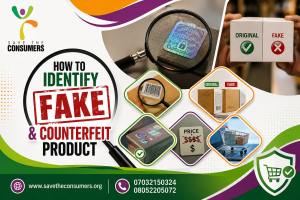
How to Identify Fake and Counterfeit Products
Fake or counterfeit products are goods deliberately made or presented to look like genuine products. They can be unsafe, ineffective, or significantly lower in quality. Consumers can reduce the risk of buying them by checking several things before making a purchase.
- Check the Packaging
Look carefully at the package for:
- Spelling or grammatical errors
- Poor-quality printing
- Faded colors or unusual fonts
- Missing information
- Damaged or poorly sealed packaging
- Incorrect logos or branding
Genuine manufacturers generally maintain consistent packaging quality.
- Examine the Product Carefully
Compare the product with one from an authorized seller. Look for differences in:
- Logo and brand name
- Color and design
- Size and shape
- Materials and finishing
- Labels and markings
- Product serial numbers
A small difference does not automatically prove a product is fake, but several unusual differences are warning signs.
- Verify the Serial Number or QR Code
Some manufacturers provide serial numbers, QR codes, holograms, or authentication codes. Where available, use the manufacturer’s official verification system rather than relying solely on a QR code printed on the package.
- Be Suspicious of Extremely Low Prices
If a product is being sold at a price that is dramatically below its normal market price, investigate before purchasing. An unusually cheap price can be a warning sign of counterfeit goods, stolen goods, or other problems.
- Buy from Reputable Sellers
Purchase from:
- Authorized dealers
- Established retailers
- Official brand stores
- Trusted distributors
Be especially careful when purchasing expensive products from unknown online sellers.
- Check the Manufacturer’s Information
Look for:
- Manufacturer’s name and address
- Importer/distributor information where applicable
- Batch or lot number
- Manufacturing and expiry dates where relevant
- Customer-service contact details
Missing or suspicious manufacturer information should raise concerns.
- Check Product Registration Where Applicable
For regulated products in Nigeria, verify the relevant registration or approval information with the appropriate regulatory authority. For example, products that fall under the National Agency for Food and Drug Administration and Control (NAFDAC) should be checked through appropriate NAFDAC channels.
- Compare with the Official Product
Visit the manufacturer’s official website and compare the product’s:
- Packaging
- Specifications
- Features
- Model number
- Product images
- Available colors and sizes
If the product differs significantly from the manufacturer’s information, investigate further.
- Check the Seller’s Details
Before buying online, examine:
- Seller’s business name
- Physical address
- Contact information
- Customer reviews
- Return/refund policy
- History and reputation
Do not rely entirely on online ratings, as fake reviews can also exist.
- Ask for Proof of Purchase
For expensive goods, request a genuine receipt or invoice. This can help establish where the product came from and provide evidence if you later need to make a complaint.
- Watch for Tampering
Check whether:
- Seals have been broken
- Labels have been replaced
- Packaging has been resealed
- Product information appears altered
- Expiry dates look manipulated
CONCLUSION
Identifying fake and counterfeit products is an important step in protecting consumers from financial loss, unsafe goods, and poor-quality products. Consumers should always examine packaging, verify product details, check serial numbers or registration information where applicable, compare products with those shown by the genuine manufacturer, and purchase from trusted and authorized sellers. Being careful and informed before making a purchase can greatly reduce the risk of falling victim to counterfeit products. When consumers encounter suspected fake goods, they should preserve evidence and report them to the appropriate regulatory or consumer-protection authorities.