
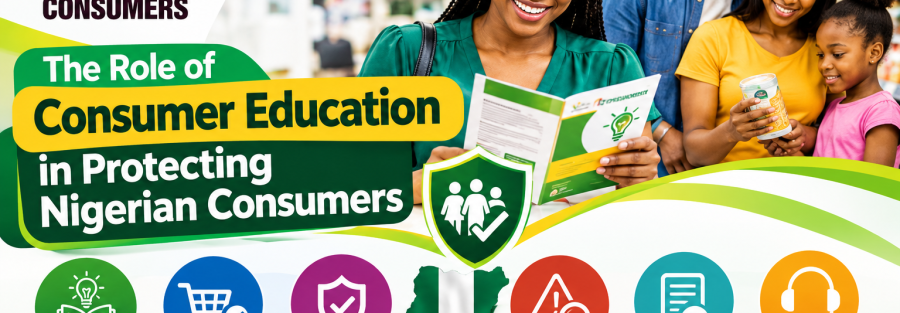
The Role of Consumer Education in Protecting Nigerian Consumers
Consumer education plays an important role in helping Nigerians make informed decisions about the products and services they purchase. In a marketplace where consumers may encounter counterfeit products, misleading advertising, hidden charges, poor-quality goods, online scams, and unfair business practices, knowledge is one of the strongest tools for protection.
A well-informed consumer is more likely to recognize potential risks, understand their rights, and take appropriate action when those rights are violated.
- Helps Consumers Understand Their Rights
Consumer education teaches people about their basic rights when purchasing goods and services. Consumers become more aware of issues such as product quality, accurate information, fair treatment, refunds, warranties, and complaint resolution.
Knowing these rights makes it easier for consumers to challenge unfair practices.
- Helps Consumers Make Informed Purchasing Decisions
Consumers make better decisions when they know what to look for before buying a product or service. Education can encourage consumers to:
- Compare prices and product quality
- Read labels and terms and conditions
- Check expiry dates
- Ask for receipts
- Verify sellers
- Research products before purchasing
These simple habits can reduce the risk of making costly purchasing mistakes.
- Protects Consumers From Counterfeit Products
Counterfeit goods can be difficult to distinguish from genuine products. Consumer education can teach Nigerians how to look for signs of counterfeit products, verify product information, purchase from reliable sellers, and report suspicious goods.
- Helps Consumers Avoid Online Scams
As online shopping and digital transactions become more common, consumers face new risks. Consumer education can help people recognize fake websites, fraudulent sellers, suspicious payment requests, fake promotions, and misleading online advertisements.
Consumers can also learn safer practices for protecting their personal and financial information.
- Creates Awareness About Hidden Charges
Consumers may sometimes pay charges they did not fully understand when using financial, telecommunications, transportation, or other services. Education encourages consumers to ask questions, read terms and conditions, examine bills, and request explanations for unfamiliar charges.
- Encourages Consumers to Report Violations
Knowing how and where to make a complaint is an important part of consumer protection. Educated consumers are more likely to document problems, keep receipts and other evidence, contact the relevant business, and report unresolved violations to appropriate consumer-protection authorities.
- Promotes Awareness of Product Safety
Consumer education helps people understand why they should check expiry dates, safety instructions, product labels, packaging, and relevant quality information before purchasing or using products.
This is particularly important for food, medicines, electrical products, cosmetics, and other products where poor quality can create serious risks.
- Reduces the Impact of Misleading Advertising
Advertisements can influence purchasing decisions. Consumer education teaches people to distinguish between useful product information and potentially misleading claims.
Consumers who critically evaluate advertisements are less likely to make decisions based solely on exaggerated promises.
- Encourages Responsible Consumer Behaviour
Consumer protection is not only about businesses. Consumers also have responsibilities. Education encourages people to use products according to instructions, keep purchase records, follow appropriate complaint procedures, and provide accurate information when reporting problems.
- Strengthens Consumer Advocacy
When consumers understand their rights and responsibilities, they can work together to demand better products, transparent pricing, quality services, and fair treatment.
Consumer education therefore strengthens the voice of consumers and contributes to a more accountable marketplace.
Conclusion
Consumer education is a powerful tool for protecting Nigerian consumers. It gives people the knowledge they need to make informed purchasing decisions, recognize scams and counterfeit products, understand their rights, question unfair charges, and report violations.
An informed consumer is better equipped to protect their money, safety, and interests. For this reason, consumer education should be an ongoing effort involving consumers, businesses, schools, government agencies, and consumer advocacy organizations.
Know your rights. Make informed choices. Speak up when your rights are violated.
