
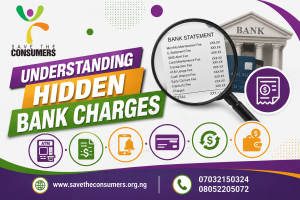
Understanding Hidden Bank Charges
Hidden bank charges are fees that customers may not notice or fully understand until they appear on their account statement. These charges can reduce your account balance and make banking more expensive.
Common Types of Bank Charges
- Account maintenance fees
Charges for maintaining or managing a bank account. - ATM withdrawal fees
Fees charged for using certain ATMs, especially those outside your bank’s network. - Transfer charges
Fees deducted when sending money from one account to another. - SMS or alert charges
Small fees charged for transaction notifications or account alerts. - Card maintenance fees
Charges related to ATM or debit card issuance, replacement, or maintenance. - Failed transaction charges
In some cases, customers may see charges connected to unsuccessful transactions that require investigation or reversal. - Overdraft or insufficient funds charges
Fees that may apply when a transaction is processed without sufficient funds, depending on the account and bank’s terms. - International transaction charges
Additional fees that may apply when using a card or account for foreign transactions. - Loan-related charges
Some loans may include processing fees, insurance, penalties, or other charges that customers should understand before agreeing to the loan.
How to Identify Hidden Charges
- Check your bank statements regularly.
- Review transaction notifications and account alerts.
- Read the bank’s terms and conditions before opening an account or using a service.
- Ask for a clear explanation of any fee you do not understand.
- Compare charges and services offered by different banks.
- Keep records of your transactions and complaints.
What Should You Do If You Find an Unfamiliar Charge?
- Do not ignore it.
- Check your transaction history and receipts.
- Contact your bank and request an explanation.
- Ask whether the charge is valid under your account or service terms.
- Keep records of your complaint and communication.
- Escalate the complaint through the appropriate consumer-protection or financial regulatory channels if the issue is not resolved.
Conclusion
Understanding bank charges helps consumers make informed financial decisions and avoid unnecessary costs. By regularly monitoring account statements, asking questions, and understanding the terms attached to banking services, customers can better identify unexpected charges and protect their money. Always check, question, and understand every deduction from your account.