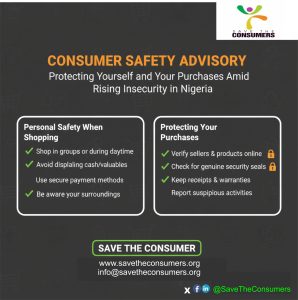
Nigeria is currently experiencing a challenging period of insecurity. While government and security agencies continue working to restore safety, consumers must also take proactive steps to protect themselves, their families, and their hard-earned money. In times like these, staying informed is not only wise but necessary.
At Save The Consumers Initiative, our mission is to help Nigerians make safe, smart, and lawful decisions when engaging in commercial activities both online and offline. This advisory provides practical steps every consumer should follow to reduce risk and stay safe despite current circumstances.
Avoid remote, poorly lit, or isolated shopping areas. Choose reputable malls, markets, and supermarkets with proper security and functional surveillance. When shopping online, use verified websites, official brand platforms, or established e-commerce sites. Reducing unnecessary movement and relying on trusted online vendors can help minimize exposure to risk.
Carrying large amounts of cash increases personal vulnerability. Use POS terminals, bank transfers, or mobile payment methods whenever possible. Avoid finishing transactions late at night and always confirm payment alerts carefully to prevent fraud. If a seller insists on cash-only payments, ensure the environment is safe and well-populated. For more visit: www.savetheconsumers.org
With rising insecurity, criminals sometimes pose as delivery agents. Always request the rider’s name and delivery company before arrival. Ask to see an official ID card and confirm through the vendor’s customer support line. If anything seems suspicious, do not open the door.
Whether using taxis, buses, or ride-hailing apps, personal alertness is essential. Share your trip details with someone you trust. Verify the driver’s identity and vehicle number before entering the car. Sit in the back seat and avoid late-night trips unless absolutely necessary. Your safety must always come before convenience.
Insecurity often leads to a rise in fake online stores, fraudulent investment schemes, delivery scams, and identity theft. Before paying for goods or services, research the business on Google, social media, and consumer advocacy platforms. If an offer appears too good to be true, it is most likely a scam.
For more visit: www.savetheconsumers.org
Every consumer should have quick access to emergency contacts. This includes Nigeria Police hotlines such as 112 or 911 (depending on your state), local security numbers, fire service contacts, and medical emergency lines. Share these numbers with all family members, including teenagers.
Under the Federal Competition and Consumer Protection Act (FCCPA) 2018, Nigerians are entitled to safety and quality in the products they buy, full disclosure of information, fair and honest dealings, and redress when goods or services fail. Insecurity does not suspend these rights. Report any business that exploits the situation to the Federal Competition and Consumer Protection Commission (FCCPC) or to Save The Consumers Initiative.
Share verified safety tips with others, warn people about risky vendors or locations, and speak up when you notice suspicious activity. Community awareness remains one of the strongest tools during uncertain times.
Final Word: Your Safety Comes First
Although Nigeria is experiencing insecurity, consumers can significantly reduce risk by staying cautious, informed, and proactive. Protect your safety, your money, and your peace of mind. Save The Consumers Initiativet remains committed to advocating for, educating, and supporting Nigerian consumers through every challenge.
Stay alert. Stay informed. Stay safe.